
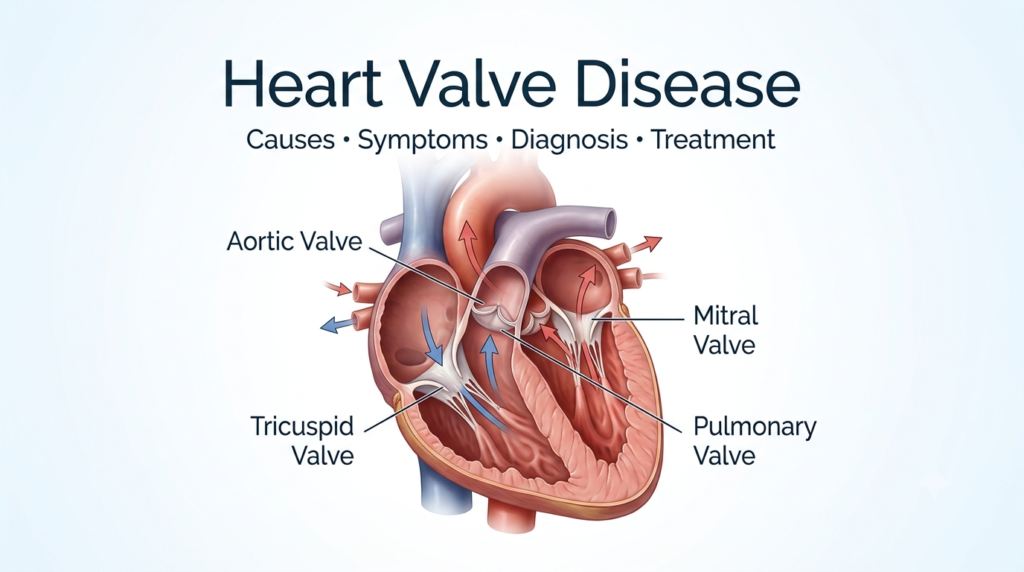
The heart is one of the most vital organs in the human body. It works continuously to pump blood and oxygen to every part of the body. To ensure that blood flows in the correct direction, the heart contains four valves that open and close with every heartbeat.
When one or more of these valves become damaged or fail to function properly, it can lead to Heart Valve Disease, a condition that affects the heart’s ability to pump blood efficiently.
The Four Heart Valves
Each valve has a specific role in maintaining the smooth flow of blood through the heart.
1. Tricuspid Valve
Located between the right atrium and the right ventricle, this valve regulates blood flow from the upper to the lower chamber on the right side of the heart.
2. Pulmonary Valve
Situated between the right ventricle and the pulmonary artery, it allows blood to flow from the heart to the lungs for oxygenation.
3. Mitral Valve
Located between the left atrium and the left ventricle, this valve controls blood flow on the left side of the heart.
4. Aortic Valve
Positioned between the left ventricle and the aorta, it allows oxygen-rich blood to be pumped from the heart to the rest of the body.
Types of Heart Valve Disease
Heart valve disease generally occurs in two forms:
1. Valve Stenosis
Valve stenosis occurs when the valve opening becomes narrower than normal. As a result, blood cannot flow freely through the valve, forcing the heart to work harder to pump blood.
Over time, this extra workload may weaken the heart and reduce its pumping efficiency.
2. Valve Regurgitation (Valve Leakage)
Valve regurgitation occurs when the valve does not close completely. This allows blood to leak backward instead of moving forward.
The heart must pump additional blood to compensate for the leakage, which eventually leads to enlargement and weakening of the heart.
Causes of Heart Valve Disease
Several conditions can damage the heart valves.
Rheumatic Heart Disease
Usually affects children and young adults. It develops as a complication of untreated streptococcal throat or tonsil infections, where the body’s immune response damages the heart valves.
Congenital Heart Valve Disease
Some individuals are born with abnormal heart valves due to developmental defects present at birth.
Degenerative Valve Disease
Common in older adults, this occurs due to age-related wear and tear, calcium deposition, and degeneration of the valves.
Ischemic Heart Disease
A heart attack caused by blocked coronary arteries can damage the heart muscles that support the valves, leading to valve dysfunction.
Infective Endocarditis
A serious bacterial or fungal infection of the heart valves that can severely damage valve tissue if not treated promptly.
How Does Heart Valve Disease Affect the Heart?
If left untreated, valve disease may lead to several complications, including:
- Enlargement (dilatation) of the heart chambers
- Irregular heartbeat (arrhythmias)
- Increased pressure on the lungs
- Congestion of the liver
- Heart failure in advanced cases
Symptoms of Heart Valve Disease
Symptoms usually develop gradually and often become more noticeable during physical activity.
Common symptoms include:
- Shortness of breath, especially during exertion
- Palpitations or irregular heartbeat
- Chest discomfort in some patients
- Dizziness or fainting (syncope)
- Generalized weakness and fatigue
- Swelling of the feet, ankles, or legs
- Reduced exercise tolerance
If these symptoms persist or worsen, medical evaluation should not be delayed.
How is Heart Valve Disease Diagnosed?
Your cardiologist may recommend one or more of the following investigations:
- Electrocardiogram (ECG): Evaluates the heart’s electrical activity and rhythm.
- Chest X-ray: Assesses heart size and detects congestion in the lungs.
- Echocardiography (2D Echo with Doppler): The most important test for diagnosing heart valve disease. It provides detailed images of the heart valves and measures the severity of valve narrowing or leakage.
Additional tests such as Cardiac CT, Cardiac MRI, Stress Testing, or Cardiac Catheterization may be advised in selected patients.
Treatment of Heart Valve Disease
Treatment depends on the type of valve affected, the severity of the disease, symptoms, and the patient’s overall health.
Medical Management
Patients with mild to moderate valve disease are often managed with medications to:
- Control symptoms
- Reduce the workload on the heart
- Manage blood pressure
- Treat irregular heart rhythms
- Prevent complications
Regular follow-up with echocardiography is essential to monitor disease progression.
Surgical or Interventional Treatment
When valve disease becomes severe or symptoms significantly affect daily life, intervention may be necessary.
Treatment options include:
- Heart valve repair
- Surgical valve replacement
- Minimally invasive valve replacement procedures (such as Transcatheter Valve Replacement) in selected patients
Your cardiologist and cardiac surgeon will recommend the most appropriate treatment based on your individual condition.
Can Heart Valve Disease Be Prevented?
Although not all valve diseases are preventable, you can reduce your risk by:
- Promptly treating throat and tonsil infections
- Maintaining good oral and dental hygiene
- Controlling blood pressure, diabetes, and cholesterol
- Avoiding smoking and tobacco use
- Exercising regularly
- Eating a heart-healthy diet
- Attending regular health check-ups
Conclusion
Heart valve disease is a common but treatable condition. Early diagnosis, regular follow-up, and timely treatment can prevent serious complications and significantly improve quality of life.
If you experience symptoms such as shortness of breath, palpitations, dizziness, or swelling in your legs, consult a cardiologist without delay.
With modern diagnostic techniques and advanced treatment options, most patients with heart valve disease can lead a healthy, active, and fulfilling life.